Thursday, May 28, 2009

Call for International Writing Entries: Aesthetica Magazine


Send submissions by August 31st, 2009

Tuesday, May 26, 2009

Literary Agents Who Blog

If all goes as planned, I would like to feature a few agents on this blog in June, literary agents who blog. I would just post a few things they say in a very short interview (these are very busy people); since they blog, I thought they may not mind chatting with a fellow blogger. As far as I know, this will be a successful undertaking.

If you know agents who blog, please bring them to my attention. Let's talk with them; agents are our friends (and this is not kissing up or pandering in any way). They are nice fellows.

Monday, May 25, 2009

In this Report Chinua Achebe is an Acclaimed South African Writer

The Alternative Information Center reports that on Saturday the Israeli police forcefully closed the Palestine Festival of Literature in East Jerusalem.

"The festival included the participation of 17 internationally-known literary figures and an audience of local and international participants", the report reveals.

In the same report, we learn that this is the second year of the festival. The inaugural one was attended last year by many renowned writers, including the South African author Chinua Achebe. South Africa, Nigeria, what's the difference? J.M Coetzee, after all, is a Zambian author. But I'm now focusing on the trivial.

Disrupting, in fact dispersing, a writer's festival. Can you believe these guys?

Read the whole story at AIC.

Sunday, May 24, 2009

America Introduces Another Fiction Series and It Includes African Writers


A chance visit to Barnes & Noble this afternoon led to this discovery: a book entitled Best African American Fiction 2009. I am already a collector of the Best American Short Stories and all the other bests, so I was thrilled to discover another series.

Best African American Fiction 2009 series is edited by Gerald Early. You know how these series work, right? There is a long-term series editor, who selects a guest editor every year, so the guest editor for the first issue of the series is E. Lynn Harris. The series is published by Bantam Books as a trade edition, you know, the usual stuff. The inaugral issue's ISBN is 9780553385342 and more product details can be found at Bantam-Dell.

The three goals of the series are:

1. to bring to the attention of a wide variety of readers the best fiction published by African Americans in a particular year

2. to bring to their attention some of the lesser known sources that feature African American writing

3. to offer an organic, ongoing anthology wherein, from year to year, one may observe shifts and changes, trends and innovations, in African American fiction writing.

According to the series editor, Gerald Early, the anthology will "attempt to offer writing that has a feeling of immediacy, of urgency, that helps us understand the way we live now."

Right now I am trying to attract people to a dialogue about what makes African literature what it is, the criteria, developments, weaknesses, and so on. So is the Nigeria writer Jude Dibia, who has joined in this necessary debate.

I noticed too that the editor of this new series has thought about the question of definition and territory, going so far as to ask: What is an African American?

For the purpose of anthologizing works for the series, an African American is "any person of color from anywhere in the recognized African Diaspora who lives in the United States either temporarily or permanently, who writes in English, and who is published by an American-based publisher or in an American-based publication."

After seeing this description I looked at the contents and found Nigeria's Chimamanda Ngozi Adichie. I saw Chris Abani too, and there was a Caribbean author as well. What that means is that some of the stories are not going to be set on American soil, for instance Adichie's "Cell One"; and as a teacher in the American higher education system, I believe that any time students are able to travel beyond these shores, they are enriching their literary education faster....

The contents also showed other powerful authors like ZZ Packer, Junot Diaz, Mat Johnson and many others. The book has a major innovation; it has a section that features Young Adult fiction, and some of the fiction pieces are excerpts from the authors' novels. This can be a perfect reader for literature and even composition classes, a survey of some of the key contemporary African American writers like Chimamanda Ngozi Adichie, Chris Abani, ZZ Packer, Jacqueline Woodson and Walter Dean Myers.

When I read any of these two-person edited series anthology, I always read the two introductions or prefaces with a passion. So I read both Gerald Early and E. Lynn Harris's introdutions and realized that they are in themselves good sources of information about African American literature; you know you are going to like a book when its two introductions keep mentioning authors you have always loved.

According to Harris, this book might as well be considered a "who's who of contemporary black fiction". And quite a few people out there would appreciate a book like this.

Short stories are great in that they are easy to anthologize and to use in writing workshops and fiction classes. Since Adichie published The Thing Around Your Neck, she has begun to appear in most of the new colleges anthologies being published in the United States, and there are going to be many more where these are coming from because with the recent update by MLA of writing and documentation standards, publishers are going to do what the Shona call chipatapata to publish many--I mean many--updated textbooks.

Saturday, May 23, 2009

Munyori Lit (June/July) to Feature Several Interviews on Dambudzo Marechera

The Dambudzo Marechera conference took place on from May 15 to 17 at Oxford University at an event that has been described as the university's way of reclaiming an African poet that it once rejected. My interviews with Dambudzo Marechera scholars and/or proteges will cover this and other issues regarding the symposium.

The (interview) issue is scheduled to post on June 15.

Thursday, May 21, 2009

How about a Writing Competition Restricted to Rural Africa, or Rural Anything?

In writing, as in education and other services to, or opportunities for, humanity, there has to be an element of outreach. I am very happy with the work that organizers and sponsors of African writing awards are doing in discovering new talent, but I have often noticed these discoveries tend to focus on the continent's elites and often ignore (usually inadvertently) huge rural populations where talent might be hiding.

Profiles of the winners of contests like the PEN South Africa, Caine, Commonwealth, and many others, tend to be of writers based mostly in urban areas, writers with access to EVERYTHING (and lately everythng means the internet). This falls short of saying that these are usually priviledged writers who could probably do just fine without needing to be discovered by an international award. Every writer needs to be discovered, some may argue, and they would be right, as long as they mean every possible talent we can pounce on (as some of the awards set out to do).

I know for a fact that there is so much artistic talent in the rural areas of Africa that is not being tapped into. There are writers there who don't have an idea that something like the CAINE exists. Okay, the CAINE accepts submissions only from publishers, which means the work would have already been published by an often city-based press which drew its submissions from the cities (usually), while a Marechera sits there in Mazvihwa, Muringi, or Kezi, undiscovered, perhaps with no hope of ever going to be discovered. Who cares? Someone may be tempted to ask. But we don't go around asking those kinds of questions if we are serious about discovering Africa's (or any place for that matter)full potential, and especially if the objectives of our contests often state that we are serving Africa (or any place for that matter). Did I just say "our contests"; yes, just in case I end up organizing my own competition one day, I would have to remember this too.

I am just simply saying let us (I edit an online journal, which noone in Kezi or Mazvihwa reads)reach out more. One Ghana, One Voice, an online poetry magazine, edited from Canada, was at one time talking about sending fliers to Ghana (or producing them there; actually, producing them there because Julian Adomako-Gymah, the OGOV co-founder, is based in Ghana)and distributing them to the country's remotest places as a way to tap into the talent that otherwise would not be exposed.

I am happy, as it is, about any African writer winning an international award, but I often ponder about how representative the awards are of the full potential of Africa, etc, if they don't even attempt to reach out to Kezi. I keep mentioning Kezi because many years ago I travelled with two book people to a missionary school there, where a student read a short story that could have prompted any publisher to sign her up on the spot; and at the end, as I was talking to her,I found out that she was from Harare, where we had travelled from. Still, that worked, because we were in Kezi now, looking for talent. Don't they say location is everything?

Perhaps, when I get to launching my own contest, I will name it something like RAW (Rural African Writers). I would not, of course, be happy with associating the African countryside with rawness, but I would focus on ending the raw deal that these writers currently get, or I would switch it around and call it WAR (Writers' African Rural), which would require too much explanation. Maybe, I could capitalize on the idea of the roar and call it RWOAR (Rural Writers of Africa Rising), with a silent "W". Anything for the rural African writer....

New Read: Sea Breeze Journal of Contemporary Liberian Writing


The new issue of Sea Breeze Journal is out. It features a rich mix of artistic genres which represents a vibrant artistic culture in Liberia and its Diaspora.

The current issue's editor is also the Contributing Fiction Editor for Munyori Literary Journal. Great work Doeba Bropleh.

Wednesday, May 20, 2009

Dambisa Moyo to Talk in San Francisco

Priority Africa Network (PAN) presents Dambisa Moyo, in Conversation with John Wood.

Author of DEAD AID: Why Aid is Not Working and How There is a Better Way for Africa at the Museum of the African Diaspora, 685 Mission Street in San Francisco

Thursday, June 4
6:00 pm Reception
6:30 Program begins

Zambia-born Dambisa Moyo is an economist and the author of Dead Aid: Why Aid is Not Working and How There is a Better Way For Africa,published in the spring of 2009. The book offers proposals for developing countries to finance development, instead of relying on foreign aid. It became a New York Times bestseller upon its release in the United States and remains a bestseller amongst Political and Economic books.

It's Online: Cosumnes River Journal

Issue 3 of the three-year-old Cosumnes River Journal now has an online version. I am one of the sixteen people who make up the Editorial Team, and I am proud of this product.

The journal comes out once a year (in May), but we are already accepting submissions for the next issue.

Tuesday, May 19, 2009

Meet NoViolet (Mkha) Bulawayo, Zimbabwean Writer

Uk-based Zimbabwean author and scholar, Tinashe Mushakavanhu, has interviewed NoViolet Mkha Bulawayo, a young Zimbabwean writer who was highly commended by J.M Coetzee in the PEN/Studzinski Literary Award for her short story "Snapshots". Mkha is an MFA student at Cornell University. Read the interview at arstinitiates.

Mkha blogs at NoViolet. Go there and learn some Ndebele while reading about literature.

Here are some numbers from the literary contest Mkha received the honorable mention:

The 2009 PEN/Studzinski award attracted an unprecedented 827 entries, 625 of which met with the rules of entry. A team of 38 readers undertook 1446 readings under strict rules of author anonymity to shortlist 195 stories, and 34 stories were chosen as finalists by the PEN Editorial Board comprising Shaun Johnson, Anthony Fleischer, Justin Fox, Harry Garuba, Alastair King and Mary Watson. The finalists' stories will be published in an anthology, New Writing from Africa 2009, due for release shortly.

The majority (672) of entries were received from South African authors. Of the 155 non-South African authors, the majority (76) came from Nigeria, while entries were also received from Algeria, Botswana, Kenya, Lesotho, Malawi, Mauritius, Morocco, Swaziland, Uganda and Zimbabwe. With no age limit, the award attracted entries from all ages ranging from 10 (the youngest entrant) to 101 (the oldest). The 30 - 40 age group was the most prolific and 25 of the 34 finalist stories were written by women.

Readings of Munyori Lit Submissions In Progress

The next issue of Munyori Literary Journal is going to post on June 15. My team is currently reading the submissions for different genres. Feel free to send your poetry, short stories, essays, reviews, interviews, etc.

Monday, May 18, 2009

Marechera in Oxford, Gappah in South Africa: A Zim Lit Weekend

The weekend of May 15 was a busy one for Zimbabwean literature. Scholars from all over the world met at Oxford University to celebrate Dambudzo Marechera's work and life. Noted scholars like Flora Veit-Wild, Memory Chirere, and others presented papers about Marechera. I was a bit disappointed that there wasn't much international publicity about the actual symposium. Somehow I wanted to feel like I had been there too by watching something on BBC, YouTube, etc, but that's still okay. The fact that it happened helps publicize, in different scales, the work of this powerful Zimbabwean writer. Artsintiates has reported that House of Hunger was re-issued and relaunched at the event by Pearson Educational, which is reportedly planning to restore the African Writers Series. As most will recall, the AWS under Heineman was a strong force in the defining and canonization of what we call African Literature today.

While the Marechera Symposium was going on, Petina Gappah was in South Africa launching An Elegy for Easterly at different locations. The first one was in Capetown, at the Book Lounge, which Petina herself facebooked she was impressed by. Her books were sold out at the event. After her many activities in South Africa, which also include a Book Festival, and a dialogue with Alesandra Fuller, she will proceed to Zimbabwe next week to launch An Elegy...

Noviolet Bulawayo (a Zimbabwean writer based in the US) received honourable mention in the J.M. Coetzee-judged South African PEN / STUDZINSKI Literary Award. This is a big deal in African literary circles: a nod from J.M. Coetzee goes a long way. And it hints at a possible break through for the North America-based Zimbabwean writers. We definitley are in a tough market, but we need to catch up with our brothers and sisters in Europe. But wait, we have Sarah Ladipo Manyika in San Francisco and Zvisinei Sandi in Stanford, not far from San Francisco, and Lion Press has said that Ignatius Mabasa's book is going to be launched in San Francisco. There is Alexandra Fuller in Wyoming, and I know of one or two Zimbos in MFAs (Remember, Iowa nurtured our own Shimmer Chinodya). Iowa versus East Anglia--things could get competitive.

Friday, May 15, 2009

Jonathan Masere on African Literature

Yesterday I articulated that I am thinking of how nice it would be to have books or articles that discuss how to read African literature, a publication in the mode of Harold Bloom's How to Read and Why. Bloom's book looks at the different genres of literature and explains how to read by discussing key works that he calls the best for each category. He argues that most people are drifting away from reading because there are so many distractions, but if you still believe in reading, you might as well read the best work there is.

Of course, the criteria Bloom uses to judge what's best is questionable as his best cannot be everyone's best, which is why, before I start telling people how to read African literature, which will end up being about telling them what to read, I should first talk with other readers to find out what they think of the category of African literaure itself. Jonathan Masere has responded, and below are his answers to the questionaire I built yesterday:


1. What exactly is African literature?

I personally think the definition of African literature will always be a subject of debate at the end of which there will never be a consensus. Howbeit, it could be defined along the Africanity of authors and, to a lesser extent, the subject matter of the works in question. Pursuant to the afore-mentioned definition, literary work by an African writer inevitably results in African literature. The literary product of one’s writing endeavour is inherently reflective of the writer’s experience from childhood to the juncture where one’s work is put forth for public consumption.

2. Why is it called African literature?

Why is it not simply literature?This is an intractable issue that has vexed noted writers like Soyinka, Ali Mazrui and Achebe. I am happy with Chinua’s definition best captured when he said, and I paraphrase him; “An African who says he or she does not write African literature is as foolish as a man who chases after a rat escaping from his burning hut instead of trying to put out the fire.”

3. Which is the best African literature?

This is like beauty for it is in the eyes of the reader, so to speak. Anyway, what other African literature is there?

4. Who is the father, or the mother of African literature?

I have qualms ascribing metaphorical parenthood to African literature. For me it would be easier to respond were I asked to name the African writer who has inspired me the most. In that case I would say Chinua Achebe through his book Things Fall Apart.

5. Why is Chinua Achebe discussed more than Amos Tutuola or V Mudimbe?

Comparing Achebe and Tutuola boils down to a comparison between Things Fall Apart and The Palmwine Drunkard. Things Fall Apart covers a wide range of societal aspects experienced by an African community at one time or the other, namely; (i) the bitter fruits of laziness and how one’s lassitude becomes a burden for one’s descendants, (ii) fear of failure and how it can lead to self-emollition, (iii) acquisition of dignity and respect through personal achievement regardless of misfortunes of one’s parents, (iv) the importance of heeding the words of one’s elders, (v) the significance of ngozi, the penalty for shedding the blood of one’s child, adopted or otherwise, (vi) the fragility of a community when it adopts and enforces norms and mores that are too rigid and (v) the vulnerability to outside forces when a community is too inflexible and restricted by archaic dogmas.

In my opinion, Chinua Achebe succinctly captures all this, and many more, in Things Fall Apart. The book encapsulates ruin that can befall an unflinching individual and a culturally static society.

Just as the Christian hymns touched something at the core of Nwoye, so does Things Fall Apart to this man’s cultural soul. I am a Shona of the Rozvi extraction. Any work that may directly or indirectly give me an insight on fcators that may have precipitated the demise of a once mighty community is greatly welcome. Given the invariance of mankind's behaviour, especially African, Chinua Achebe’s book strikes a chord with me much more than any other book by an African writer. Things Fall Apart does, to a point, help me get a general understand how the once pre-eminent Rozvi may have fallen apart and got scattered to all four corners of the world? I do not think so.

Here is the caveat though; it boils down to personal literary and cultural tastes.

6. Is it still African literature if it was first written in French and was then translated into English?
Of course it ought to be.

7. Why do other African writers only write in European languages, and not the languages of their mothers?
In my opinion, it is a matter of personal choice. If the author’s primary objective is to reach a big market and sell as many books as possible, what Sarudzai Mabvakure aptly describes as bestsellerdom, simple market forces dictate writing in a language that enables the writer to attain that goal. Others write in non-African languages to reach a wider readership but a quest for personal glory is not the primary motive. There are some writers who genuinely want to share African orature, as Sigauke calls it, with those beyond the African linguistic, geographic and cultural boundaries. These two examples are at the extreme termini of the spectrum of motives and the rest fall in between. Notwithstanding the individual motives, we all get culturally richer at the end of the day.

Additionally, there are instances where an African writer writes in a “European” language because the writer’s command of one’s “mother” is comparatively too poor to enable the writer to effectively put forth his or her ideas. This is a fact that many may not be comfortable with.

Let me say that I disagree with the characterization of languages used in Africa as European. I would prefer to call them languages adopted or culturally assimilated from erstwhile colonial powers. If one is so fluent at an assimilated language to the point where one can comfortably teach, write for, and even argue before a highly learned audience that claims that language as it mother tongue, without missing a bit, I say that is no longer a foreign language. To all intents and purposes, it becomes one’s mother tongue even if it was foisted by the bashing of one’s head with the priest’s Bible or at the prodding of the barrel of a gun.

On a personal level, I am comfortable writing in Shona and English. I write in Shona out of interest whereas I write in English because of professional obligation as well as out of personal interest.

8. Is Ngugi serious?

This question presupposes that the person or people who put together this questionnaire is or are personally aware of moments where said Ngugi has behaved in such a manner as to leave people questioning his seriousness. Has he? If he has, seemingly to the satisfaction of those empanelled to put this questionnaire, it would be helpful were they to make respondents privy to the details.

9. Why does Achebe live in the United States?

I think the answer to this is simple. Achebe lives in the United States of America for the same reason some of us do not live in our villages. What is the probative value of this question, really?

10. Is all African literature post-colonial?
Not necessarily.

11. But seriously, which writers make up African literature?All the writers who state that their literary works comprise African literature ought to fall under this category.

12. How does one read African literature: where do you begin, where do you stop? Or do you stop? Should you know African orature in order to understand the literature?

I will pass on this one.

13. Who are the readers of African literature and why?

Pass!

14. What does an African writer want?

The answer will vary from writer to writer. However, if I may hazard a guess, there are some who want fame, some who want to proudly show to the rest of the world the wealth of African culture, some want to preserve part of our culture, some who want to add to the pool of African culture, and so on and so forth. All these goals, however variegated, are noble.

15. Why?

In my humble opinion, personal satisfaction may very well be at the core of the motive.

Thursday, May 14, 2009

Let's Talk: How to Read African Literature and Why

I am fascinated by the authority assumed in Harold Bloom's How to Read and Why. In that book he goes on to discuss authors whom everyone who is serious about reading should read in the literary categories of short story, poetry, novels, plays, and more novels. Quite a few of my favorite authors on his list, and I like how he confidently argues that by reading those writers, in the way he suggests, you will enrich not only your reading experience, but also your life. If you don't read the books suggested in this book, you probably don't know how to read, Bloom seems to argue.

So now I am thinking....with the increasing popularity of African literature (this is not to say it has not been popular before), there is a need (once again) for books that tell readers how to read the literature (assuming that they don't know what to read, or if they know, where to begin. Especially where to begin.) So I can already anticipate answering questions like these:

1. What exactly is African literature?
2. Why is it called African literature? Why is it not simply literature?
3. Which is the best African literature?
4. Who is the father, or the mother of African literature?
5. Why is Chinua Achebe discussed more than Amos Tutuola or V Mudimbe?
6. Is it still African literature if it was first written in French and was then translated into English?
7. Why do other African writers only write in European languages, and not the languages of their mothers?
8. Is Ngugi serious?
9. Why does Achebe live in the United States?
10. Is all African literature post-colonial?
11. But seriously, is which writers make up African literature?
12. How does one read African literature: where do you begin, where do you stop? Or do you stop? Should you know African orature in order to understand the literature?
13. Who are the readers of African literature and why?
14. What does an African writer want?
15. Why?

Can you imagine the fun one would have in answering all these questions? Because such questiond exist, and because they are often asked in colleges, book clubs and book signings, they should be answered by someone.

If you want to give it a try, go ahead and answer two of the above questions. Let's talk.

Wednesday, May 13, 2009

Petina Gappah on Frank O'connor Prize Longlist

Petina Gappah's Elegy for Easterly has been nominated for the Frank O'Connor International Short Story Award. It is one of the 57 short story collections longlisted for this prestigious international short fiction competition. The Prize website describes the competition as follows:

The Frank O'Connor International Short Story Award is an annual award of €35,000 and is currently the world's richest prize for the short story form. The award is in memory of the late Frank O'Connor, one of the world's most renowned short story writers. The award, organised by the Munster Literature Centre and funded by Cork City Council, is presented in O'Connor's hometown of Cork, Ireland, at the end of the Frank O'Connor International Short Story Festival. The prize is awarded to the author of the book judged to be the best collection of stories published in English for the first time anywhere in the world in the twelve months between September of one year and August of the next. If a translated book wins, the purse is shared equally between the author and translator.

Here are the details of the longlist by country:

15 American Authors:

Eleanor Bluestein, Tea and Other Ayama Na Tales, BkMk Press (University of
Missouri-Kansas City)

Bonnie Jo Cambell, American Salvage,Wayne State University Press

Dennis Cooper, Ugly Man: Stories, Harper Perennial

David Eagleman, Sum, Pantheon Books (Random House)

Mary Gaitskill, Don’t Cry, Pantheon Books (Random House)

Lauren Groff, Delicate Edible Bird, Hyperion

Daniel A. Hoyt, Then We Saw The Flames, University of Massachusetts Press

Ian MacMillan, Our People, BkMk Press (University of Missouri-Kansas City)

James Mathews, Last Known Position, University of North Texas Press

Christopher Meeks, Months and Season, White Whisker Books

Lydia Peelle, Reasons for and Advantage of Breathing, Harper Perennial

Andrew Porter, The Theory of Light and Matter, University of Georgia Press

Glen Pourciau, Invite, University of Iowa Press

Midge Raymond, Forgetting English, Eastern Washington University Press

Wells Tower, Everything Ravaged, Everything Burned, Farrar, Straus and Giroux


18 British Authors:

Anthony Cropper, Nature’s Magician, Route

Jane Feaver, Love Me Tender, Harvill Secker (The Random House Group)

Paul Flynn, Crossing the Border, CC Publishing

Tania Hershman, The White Road, Salt Publishing

Sue Hubbard, Rothko’s Red, Salt Publishing

Kazuo Ishiguro, Nocturnes, Faber and Faber Limited

Sushma Joshi, The End of the World, FinePrint Books

Alex Keegan, Ballistics, Salt Publishing

Charles Lambert, The Scent of Cinnamon, Salt Publishing

James Lasdun, It’s Beginning to Hurt, Farrar, Straus and Giroux

Tom Lee, Greenfly, Harvill Secker (The Random House Group)

Frederick Lightfoot, Fetish and Other Stories, Superscript

André Mangeot, A Little Javanese, Salt Publishing

Sean O’Brien, The Silence Room, Comma Press

John Saul, As Rivers Flow, Salt Publishing

Ali Smith, The First Person, Penguin Group Canada

Mark Illis, Tender, Salt Publishing

Simon Van Booy, Love Begins in Winter, Harper Perennial


5 Canadian Authors:

Tricia Dower, Silent Girl, Innana Publications and Education Inc.

Hannah Holborn, Fierce, McClelland & Stewart

Pamela Stewart, Elysium, Anvil Press

Deborah Willis, Vanishing and Other Stories, Penguin Group Canada

Kuzhali Manickavel, Insects Are Just Like You and Me Except Some of Them Have Wings, Blaft Publications


1 Dutch Author:

Arnon Grunberg, Amuse-Bouche, Comma Press


1 Estonian Author:

Kristiina Ehin, A Priceless Nest, Oleander Press


1 German Author:

Maike Wetzel (Trans. Lyn Marven), Long Days, Comma Press


1 Icelandic Author:

Gyrơir Elíasson (Trans. Victoria Cribb), Stone Tree, Comma Press


2 Indian Authors:

Jahnavi Barua, Next Door, Penguin Books ( India )

Jasmine Anita Yvette D’Costa, Curry is Thicker Than Water, BookLand Press


4 Irish Authors:

Michael J. Farrell, Life in the Universe, The Stinging Fly Press

Robert Graham, The Only Living Boy, Salt Publishing

Alan McMonagle, Liar, Liar, Words on the Street

Philip Ó Ceallaigh, The Pleasant Light of Day, Penguin Ireland


1 Macedonian Author:

Kiril Bozhinov, Eclipses: Stories of Disappearances and Reappearance, Beyond Art Productions


1 Malaysian Author:

Shih-Li-Kow, Ripples and Other Short Stories, Silverfish Books

2 New Zealand Authors:

Jeanette Galpin, Aroha and the River, Maungatiro Press of Marton

Charlotte Grimshaw Singularity Vintage


2 Nigerian Authors:

Sefi Atta, Lawless, Farafina Books

Chimamanda Ngozi Adichie, The Thing Around Your Neck, Fourth Estate LTD


1 Spanish Author:

Empar Moliner (Trans. Peter Bush), I Love You When I’m Drunk, Comma Press


1 Ukrainian Author:

Sana Krasikov, One More Year, Portobello Books Ltd


1 Zimbabwean Author

Petina Gappah, An Elegy for Easterly, Faber and Faber Limited

Introducing Carla Badillo Coronado, a poet from Ecuador

On February 4 I reported that Ignatius Mabasa (one of the leading contemporary Zimbabwean writers and a friend of mine) would be reading Shona poetry at the San Francisco Intenational Poetry Festival. Well, now I would like to report that Carla Badillo Coronado, a poet and dancer from Eduador, South America, will be featured at the same festival. This is an international festival, and a really good one for Northen California, which is put together by the city of San Franciso, the San Fransico Poet Laureate, and the Friends of the San Francisco library.

Carla Coronado, who has agreed to participate in an interview with me, is one of the poets from 15 different countries to gather in San Francisco July 23 to 27.

Describing her role at the festival, Coronado said, "I will carry the voices of my ancestors with me, and also I will dance in the Festival (traditional dance from the Andes)".

Plans are under way to bring both Mabasa and Badillo to the Sacramento Poetry Center in July.

The brief interview with Carla Coronado will be featured on this blog in the near future.

Tuesday, May 12, 2009

Busy Poetry Week in a Short Story May

On Monday night I hosted a performance by Brad Buchanan, professor of British Lit at Sac State, and Farrah Field from Brooklyn, New York. The two were amazing, and the open mic afterwards was energizing. That's the thing, the energy I get from these readings--I get so inspired I become restless. A surge of creativity.

Brad Buchanan recited (performed) English Poetry from John Milton to Dylan Thomas, famous selections. His rendition of Yeat's "The Second Coming" was a subliminal moment. I was sitting there thinking, "Walking around with these masterpieces in your head has to have a certain effect on you own writing". And of course, Brad has writtehn two well-crafted collections, The Miracle Shirker and Swimming the Mirror, both of which I have had the pleasure to read many times. I have nearly destroyed my Miracle Shirker because of good habit of crafting my poetry inside other poets' books. I hate that empty space we leave on the right of the page...it's only bad (perhaps still good) when I have to replace a copy.

I think every poet should memorize someone's poetry. If that's asking for too much, memorize and recite your own poetry.

Farrah Field read several new poems and some from her award-winning collection Rising. She was generous enough to give me a copy at the end, and I see it won the Levis Poetry Prize, judged by Tony Hoagland. According to Hoagland, Field is "a slinger of the colloquial phrase, the slangy, side-of-the-mouth aphorism, which combines the clever and the cornpone. At once masked and mouthy, cryptic and in-your-face, her voice is flavored by Southern regionalism, but the country manners are deployed at a metropolitan speed."

So as I prepare to read the collection, I notice some strong sense of place; I am taken to Arkansas, to Wyomming,I am told about "The Disturbed Mississippi", which in itself is a play with William Faulkner's phrase as presented in If I Forget Thee, Jerusalem. I respect references to Faulkner almost to the point of glaring bias. The poem laments the damage to the Mississippi River, which is "shrinking where it should not" and in places it is "a crooked appendage". Of course, over time, the river has been victim and victimizer, bringing life, but sometimes threatening it. There is something about poetry and rivers, in fact about creative writing and rivers. The scariest idea is when I set a story in Runde River, or Tugwi, or Save, even when I imagine the nameless (because I have forgotten it) river in the Rusitu Valley of Chimanimani, whatever I am creating pours out, unreservedly...life itself, we have been told many times, is like a river, and a river is a plot, of a poem, a story, just waiting to be explored, to be exposed.

If you know about cobwebs perhaps you know about spiders. In "Malvern, Arkansas", Farrah Field asks, without a question mark, "where will the spiders live after the old barn is torn down." The couplets take a wicked turn when we discover what's remembered by the persona: "Two teenagers steal away into a garage", and we have already been told, "The old lust bakes/and rises, searching for a new home," and alongside these lines, we see some like, "parishioners are singing / and clapping."

I look forward to reading the rest of the book.

This is a busy week for poetry. Tomorrow, Cosumnes River Journal editors (I am one of them) are hosting a reading by the contributors to issue number 3 of the publication. It features works by both emerging and established poets, and has a geographic reach of as far as South Africa, with the Thamsanqa Ncube "Homecoming" poem I may request to read if he does not show up to the reading. I know it deals with exile and return to home, in the context of the reality of the Zimbabwean Diaspora life, for instance.

On Wednesday, I am taking a group from CRC to the Rita Dove reading at the Crest Theatre in downtown Sacramento. The event is part of the California Lectures series, which brings reputable authors to Sacramento. Rita Dove, an accomplised writer, is a former US poet Laureate and a strong presence in African American literature.

Then on Saturday, maiwe-e, the Sacramento Poetry Center will co-host an Arts Festival for children. This is happening in the Fremont Park, in downtown Sacramento. Lot's of fun for your children, activities ranging from face painting, readings, talking to poets, live music, and many more fun stuff.

May is being celebrated by some as the month of the short story. That works for me. The recent success of writers like Petina Gappah, Brian Chikwava, Christopher Mlalazi, Chimamanda Adichie, Colm Toibin, Jhumpa Lahiri,and others, has reawakened my interest in short stories, and I have been meaning to read quite a few books. I have even pulled out my copy of Dubliners, to understand why my A-level peers said I understood "The Dead". Soon I will have more time to commit to he short story, and I will finish off May with reviews of some single short stories. Over at Emerging Writers Network, they read and talk about three short stories per day, which I think is just fantastic. To show my support for this idea, let me display the short story month logo here:


My short story work in May will culminate in the African Roar collaborative editing work with Ivor W. Hartmann, Chief Editor of the African E-Zine StoryTime. He has done a great job of publishing some very promising African writers from Cape to (shall we say it) Cairo. The book will be published in August by the UK-based Lion Press Ltd.

Sunday, May 10, 2009

Our Writers and their Writers

I like to read.

You should see me in a library or bookstore; all kinds of bookstores (big chains, small independent, used, thrift store book sections, library booksales). I like to read.

And as I read my writers, I enjoy discovering what they like to read, so as to get information about more books I can read. And my writers often don't disappoint--they point me to other amazing writers. It is always good to read what they like to read.

I recently discovered Colm Toibin, an Irish writer who has often been compared to James Joyce and others. And those others happen to be writers I have read. I want a writer to point me to writers that I already thought were good, but I also want a them to help me discover new writers along the way.

Petina Gappah, because she talks about her writing as well as her reading process all the time, just helped me discover Toibin, and I am reading The Master, which uses the American writer Henry James as the main subject of the story, in the same way that Cunningham uses Virginia Woolf as the main character. Such books are nice.

That's the beauty of writing; if you would like to make an impact, you also have to appreciate reading. Some writers pefer to read classics only while they are working on their own writing, to remove the sense of competition, or the anxiety that my result from knowing what your contemporaries are working on. I have read that Jhumpa Lahiri is like that--avoids current writing news or reviews, arguing that knowing too much of what others are doing may be discouraging.

I get to know the writers my writers like to read through interviews. I have many collections of conversations with writers for this reason; those interviews are enlightening and highly inspiring....and they send me to book stores or libraries often. That's why I like interviewing writers: I get to ask them about the writers that influenced them, and usually those end up being good writers who lead to other writers. After a while you realize that most of these works are from a common creative oasis....you have no idea, for instance, how much writing leads back to James Joyce, or to William Faulkner, or to William Golding, not to mention Anton Chekhov.

You have no idea how many times I went back to The Sound and the Fury when I was reading Harare North by Brian Chikwava. The guy who tells the story just kept reminding me of Benjy Compson. When I was reading Adichie's The Thing Around Your Neck, I kept seeking Joyce Carol Oates.

Friday, May 8, 2009

Zimdaily, Zimbabwe Times, NewZimbabwe.com, Promote Reading

As new books by Zimbabwean writers pour out (I can safely say this), I wonder about the state of Zimbabwean readership. Granted, some of these books will have a healthy readership by non-Zimbabweans., which is usually always the case., especially for those books published outside of Zimbabwe.

Since most of the people I network with are writers, I often think that everyone around me is reading. You know, reading that's not attached to a class, reading for pleasure even, or reading just to get a sense of how the literature is responding to the Zimbabwean situation. I tend to forget then that people who should be reading these books are not reading them. How do you know, you ask? Well, when I go to a whole gathering of Zimbabweans and I mention a book like Harare North, Somewhere in this Country, Elegy for Easterly, etc, and people have no idea what I am talking about, I am a bit concerned, not that it is any of my business. But it is my business, because, as a writer, I certainly hope that someone will read my work. But what should be done to nurture reading of Zimbabwean writers by Zimbabwean readers at home and in the Diaspora, especially the latter?

First, I have noticed that crowds visit the forums and blogs of online newspapers like NewZimbabwe, Zimbabwe Times, The Zimbabwean, Zimdaily (which has now given a column to Makosi Musambasi, who has a large following already on Facebook and twitter), and the Zonetradio. I can tell that visitors to these websites, mostly Zimbabweans, read the stuff with an huge appetite, and they are often engaged in debates. Columns range from ones talking about the immigrant experience, ghosts and tokoloshis,snakes, relationships, Zimbabwean music, and many others. But none of these newspapers and websites have pages committed to books and writing, even in their blogspot sections. Or if they have a section labeled Books, it is not frequently updated. Then once in a while a correspondent sends in a review or a brief author profile.

While newspapers like the Guardian and the Observer are featuring this new Zimbabwean phenomenon (the upsurge of the creative energy), the Zimbabwean papers are silent about it, or once in a while they may reproduce an article already published by another paper. The Herald has been reported to be in the habit of stealing such articles from other online papers.

And I am not complaining; the editors of these papers know best what feeds the belly, but why not have blog columns where someone goes in and adds something about books and writing. To inform the hundreds of Zimbabwean readers that they are now being written about? To say, hey, there is now a Zimbabwean publishing house called Lion Press in the UK, or that, by the way, Petina Gappah read in New York recently, with such people as Colm Toibin and Michael Ondaatje, etc... I do believe that such columns may raise reader interest.

Of course, just talking about books is not going to turn people into readers overnight. Back home we were trained to read only for diplomas and certificates, a serious miseducation that has affected some writers even. They tell you they write, and you ask them who are your favorite authors and they tell you they will get back to you about that in a week. Of course, I am now generalizing, but there is a need for developing healthier reading habits among Zimbabweans, especially those in the Diaspora who have easier access to the books that are coming out.

And the newspapers I listed above, where people go for the latest Zimbabwean news, gossip, jokes, and discussions, should have forums committed to books and writing. I know two websites that are leading by example in this area: Zimbojam, which is run by a writer and Artsiniates, which is also run by a writer. Oh, is this the secret? Let the writers themselves run their news websites? Fine then.

Thursday, May 7, 2009

From John Milton to Dylan Thomas: Performances by Brad Buchanan and Farrah Field

On Monday, May 11, I am hosting a performance of the brief history of British Poetry from John Milton to Dylan Thomas by Brad Buchanan and Farrah Field. This is happening at the Sacramento Poetry Center. The time of the event is 7:30 pm.

Brad Buchanan is Associate Professor of English at California State University, Sacramento, where he teaches Creative Writing and Modern British Literature. His poetry has appeared in more than 140 journals worldwide, including The Antigonish Review, Canadian Literature, Fulcrum, The Fiddlehead, Grain, and The Wisconsin Review. He has published two books of poetry: The Miracle Shirker (2005) and Swimming the Mirror: Poems for My Daughter (2008), and is co-founder of Roan Press, a small publishing operation (www.roanpress.com).

Farrah Field is the author of Rising (Four Way Books, 2009), winner of the The Larry Levis Prize. Her poems have appeared in many publications including Harp & Altar, Typo, Linebreak, The Cortland Review, 42Opus, the Mississippi Review, Margie, Chelsea, and others. She was born in Cheyenne, Wyoming and raised in Nebraska, Colorado, Louisiana, Arkansas, Sicily and Belgium. She lives in Brooklyn, New York.

Wednesday, May 6, 2009

Sarah Ladipo Manyika Reviews "Harare North"


Here is a review of Harare North by Sarah Ladipo Manyika, a Zimbabwean (or Nigerian) writer based in San Francisco. Sarah Ladipo Manyika grew up in Nigeria and has lived in Kenya, France, and England. She holds a Ph.D. from UC Berkeley and teaches literature at San Francisco State University (not very far from where I used to teach, if that counts for anything). Her writing includes published essays, academic papers, book reviews and short stories. Sarah's first novel, In Dependence, is published by Legend Press (2008)

I enjoyed "Mr Wonder", one of her stories (in Women Writing Zimbabwe),where a wife capitalizes on the guilty conscience of her cheating husband to have him sponsor an expensive vacation in San Francisco. And as the plot unfolds (first in Zimbabwe, then in California) we learn so much about ambition and its obstacles.

Manyika's focus in the Harare North review is different from (and soberer than)most that have been published in the big UK papers. She knows what she is talking about. Not to say that there is anything wrong with not knowing what you are talking about when you review a book, because any reader response tends to have its merits, etc, but I like how she focuses on the language use in the novel. She writes:

"Such a potpourri [of speech patterns]runs the risk of being confusing or distracting. Yet this same language might be interpreted as part of the novel's brilliance for it reflects a protagonist who has appropriated London's many speech patterns, thereby making it difficult to put him into the straitjacket of one single immigrant experience. The protagonist becomes an everyman, albeit not a likeable one, who captures the reader's attention and compels them to keep reading."

Her review is important because she brings a writer's perspective to her reading of the novel and her understanding of the issues is informed by her first-hand knowledge of the Zimbabwean situation. We need more reviews like this one.

There is so much that I can say about the language use in Harare North, and I just realized (again) that a review is the wrong medium if you have a lot to say about a book.

Monday, May 4, 2009

Interview with Dambudzo Marechera Scholar, Jennifer Armstrong, Author of "Minus the Morning"

I introduce Jennifer Armstrong, a Dambudzo Marechera scholar based in Australia. In this interview she reveals the facts behind her evocative memoir and talks about her commitment to Dambudzo Marechera scholarship. She will present on Black Sunlight at the Dambudzo Marechera Conference at Oxford University on May 15.

Minus the Morning by Jennifer Armstrong

First, let me congratulate you for two things--for the release of your memoir Minus the Morning, and for being part of the historic Dambudzo Marechera Conference at Oxford University. As I read the memoir, I am enjoying the way you tell the story, the way you remember things, the way you do memoir. In what ways do you think your memoir breaks or improves on memoir-writing rules?


Thank you very much Emmanuel. These are a thought-provoking questions indeed.

After struggling with my memoir for many years, I realised that it simply could not have been written in a conventional way. A conventional memoir requires the continuity of a self – precisely, I should say, the continuity of one self and not the introduction of multiple selves, or the breaking down of the one self and the continuation as another self. Actually my migration to Australia along with my family in January 1984 was totally catastrophic for me. I was of the age of sixteen, when I’d just mastered some of the complexities of my culture, and here I was, being thrown into the deep end again, and being forced to start anew in Australia, just when I had achieved my tenuous maturity based upon the proclivities and mores of an entirely different, African culture. Quite clearly, looking back in retrospect, I was unable to continue living with the same self. I had to develop a new one that could cope with new cultural mores and totally different demands for survival. So I lost my Zimbabwean self for a while – and it was hell! I wasn’t able to develop a new self because Australian culture didn’t mean one thing to me, and I didn’t have any conception as to how it functioned. I was a babe in the woods at the age of 16 – trying to start again – but I don’t think anyone had the slightest idea of my internal distress.

It’s hard to lose everything at once, and then you try to start again without any adult help, without your friends or companions who know what you are going through. There was also some hostility in Australia at the time about anybody being white and coming from Zimbabwe – that, and a lot of ignorance about Zimbabwean culture. Some of the Australians I encountered were trying to distance themselves from their own colonial history, their hostility towards the Aboriginals who were the original inhabitants of their country, so in the same way that someone who fears he may be homosexual goes out and beats up a gay person, I received a lot of hostility from those Australian whites who wanted to dissociate themselves from colonialism. This meant that it was really difficult to find my feet in the new country. I’m still reeling! The attacks were savage, and the distance between who I actually was and who I was perceived to be was enormous! So, in short, I couldn’t be the person who I had been whilst growing up in Zimbabwe. It was too innocent a ‘mode of being’ for it to enable me to survive in this new, cynical and worldly culture. The book is about this loss of self and what I did in order to survive it.

If you consider, again, that last idea, the “loss of self and what I did in order to survive it”, you will consider that a conventional memoir could not take into its scope this kind of an issue. It really is an intellectual and philosophical issue that would not be accommodated by pure narrative story-telling or a purely reminiscing style. So, I had to find a different way of telling my story. I broke the storyline into fragments, and allowed the form of it to speak for my broken self. I have included fragments that derived from my newer, regenerated self, which turned out to be an intellectual. But there are still fragments from the older self, and a lamentation of what this self lost in terms of Zimbabwe.


The second part of this question has to do with Dambudzo Marechera. What made you decide to do your Phd on Dambudzo Marechera?


That’s a good question! I had made up my mind to study “African literature” originally, but I had no idea yet who or what I would study. So, as you do in such a situation, I went to the university library and browsed the section on Zimbabwean literature. From the dusty shelves I pulled books by Chenjerai Hove, Charles Mungoshi, and others. One of them was the tribute book, a kind of obituary, called Dambudzo Marechera 1952-1987. I was very much struck by his pithy sayings in it that seemed to go way beyond (or, rather to decisively cut under) the logic of normal cultural conventions and the idealising of one’s society that is so common. Here was a writer talking about how there were aspects of his own cultural landscape to which he simply couldn’t relate. It was shocking but refreshingly so – for me, it was like the sensation of plunging into a cold stream. The ability to speak honestly and the sense of cultural alienation I perceived in Marechera’s work were initially what drew me to him. I was very thirsty for this kind of honesty, since it seemed to me that so much psychologically defensive nonsense had been told about Zimbabwe, with the whites digging in on one side and becoming defensively right wing, the Australians purifying themselves from within by attacking the appearance of evil rather than attempting to understand reality, and so on. Here was a writer who wasn’t idealising the condition of liberated Zimbabwe as a kind of spiritually pure state or nirvana. It is Marechera’s honesty that gives his writing a really full-bodied tone, rather than feeling lightweight and ethereal. His insights go much deeper than idealism ever will or can.


To what extent to do you think some of his writing style (say in House of Hunger or Black Sunlight) has influenced your own writing?


I am deeply indebted to Marechera for giving me the courage to tell the truth about things. Initially, I had believed that the only way to write a memoir was to idealise reality as a way of trying to heal it. I was stuck in the right-wing, conservative mode of thinking that my writing had to be triumphalist, depicting situations where, although I’d faced hardships, I had overcome them all with the pure strength of my gigantically determined mind. That is the right-wing loss and redemption narrative that many of the whites who have suffered the injurious loss of their country have been desperately trying to play out in their daily lives. Yet this redemption narrative is false. So often the loss of home and country has not been faced sufficiently, and as a result you have a thin veneer of adaptability, with many of these whites, but underneath this there are cracks and mental illnesses starting to form. You cannot deal with such great loss through idealism or through triumphalistic notions for that matter. You are not heroic because you are now living in the West, where everything is nicely white and civilised – you have still lost everything. Let us have a little bit of honestly, for a change.

In other ways, the freeform style of Marechera’s writing also appears in my book. When you are mapping your inner soul, you don’t necessarily listen to the conventions of genre, since you are attending to a different kind of principle and discipline. The discipline of mapping the soul’s structure is no less exacting and demanding than the discipline of conforming to the requirements of a particular genre, yet it imposes a very different form and structure. You are listening inwardly and trying to create a form of expression that will exactly correspond to the hidden inner-life of the psyche, rather than following a formula for structure that is already known and publicly defined.

On your blog Unsane and Savage you reflect on and discuss Marechera a lot. Your study of Marechera, I have gathered from your blog posts, is connected to shamanism. And yes, how have you been connecting Marechera to Shamanism?

The way I have come to see a connection between Marechera and shamanism is through the idea, entailed in both, that the structure of the self is actually mutable and transformable. It’s not something static and fixed forever – we do not each have only “one soul” but potentially, at least, we all have multiple souls. The shamans of yore considered that we could merge our spirits with those of animals or other entities. These shamans could depart from their bodies and visit other planes of existence in order to get the resources they needed for daily life. That meant that their souls were forever changing. Like in Black Sunlight, the soul of the traditional shaman is not the same but mutable. Shamans and the anarchists in Black Sunlight are both “changelings”. They enter different planes of consciousness from the norm, as an esoteric practice that will enable them to exert power within their societies, and to change it.

You remind us, on the blog, that the original title of House of Hunger was At the Head of the Stream. Do you think this title would have been more powerful and significant for Marechera's landmark novella?

I think the title, At the Head of the Stream, would have given the novella a more shamanistic sense to it. After all, what do shamans attempt to do but to go back to the origins of our being? They seek to intervene at the primordial level of human consciousness in order to alter the way we think about things, so that we don’t continue plodding on in the same destructive ways, but get to the bottom of whatever is injurious to us. The shaman has to go back to the psychic origins of the political injury that he and his society have sustained – the injury of colonialism – in order to heal his society. He goes back to the “head of the stream”, where the psyche (which is to say the political psyche of Zimbabwe) has its origins. Further down the stream, life already has its own determinations. It is already too late to change them, since one thing must lead to another and damage to societal consciousness will produce anguish and a desire for revenge. But by going back at the beginning of the stream of life, an intervention would still be possible. A would-be shaman must therefore return, spiritually, to the primeval origins of consciousness, in order to achieve the necessary intervention. It is a return to the head of the stream of life in order to change the direction of its flow that is profoundly shamanistic!

Of course, shamanism is pretty esoteric, but I think that if my concept of it is understood and applied to Marechera’s writing it does serve to sharpen the focus concerning what sort of political intervention Marechera was aiming for. The shamanistic angle makes Marechera out to be much more radical and logically consistent in his position than he is often assumed to have been.

Lately, there has been debate about people claiming to know Marechera even if they have not read a single work of his. One camp has argued for an avoidance of associating Marechera with beliefs or positions he may not even have held while another says people can say anything they want about Marechera's life and writing. There is even a new line of thinking that argues that we let Marechera down by not recognizing that he needed help for his mental illness, alcoholism, etc.

What's your position on these issues?


I think that Marechera is the kind of writer that people will understand on different levels. Myself, I see him as a kind of philosopher and of course a shaman. I do see the reasoning underpinning his work as being logically consistent in much the same way as the work of that great philosophical de-systematiser, Friedrich Nietzsche, is logically consistent. This logic is, however, the logic of the psyche, so it can be hard to ascertain unless one reads the author deeply. Most people will probably not spare the time for a deep perusal of Marechera’s works. I have been extraordinarily lucky to have had the time to do this. So there will be people who want to take Marechera primarily as a poet, or people who think he told great adventure stories, or whatever. I think the anarchistic spirit of Marechera would have permitted all sorts of interpretations; however, it would be a shame if the interpretations remained superficial and did not take enough into account his radical political agenda for Zimbabwe that included psychological (or, ‘spiritual’) healing. We need to individually return to the origins of the pain of war, colonialism, and loss of country for that matter, in order to receive healing. Failing this, Zimbabwe will never be healed, and will go on reacting to its wounds, and that will be an ongoing disaster.

As for Marechera’s ‘mental illness’, I’m not at all sure that he had a serious one at the latter stages of his life. He may simply have been suffering only from what is now known as post-traumatic-stress-disorder, which caused him to avoid submitting to authorities, and led to a life on the streets of Harare. The key points that art theorist Anton Ehrenzweig identifies as features of “schizophrenic art” are certainly not present in Marechera’s work at all. They are, he tells us, a mixture of horror and sweetness, with an inability to fully plumb the depths of consciousness. But plumbing the depths of consciousness is what Marechera’s work fully does, I have argued. I think that there are likely many who have mistaken Marechera’s irreverent sense of humour – which is, by the way, quintessentially Zimbabwean – with a kind of sickness and a failure to take politics seriously. But what they mean by politics is “identity politics”, which they see as the only sort. My argument is that of course, Marechera took politics very seriously indeed – but he did so as a cultural Zimbabwean; as one who could still laugh at the black humour of the tragedy of emancipation postponed. And certainly, we should have taken Marechera more seriously, given that his critiques were not mentally ill at all, but deep and far reaching – and entirely necessary to take on board, for the development of Zimbabwean art and politics.


So what can you tell us about your conference topic/paper? Just a preview, or an abstract, to get us interested.

I’m looking at how the author returns, in Black Sunlight, to a primordial psychological state – actually that defined by Kleinian psychoanalysis – in order to create the basis for a new self and a new society. The shamanistic state of ‘ecstasy’ is actually auto-destructive. One destroys one’s self, one’s old mind, in order to get a new one.


Zimbabwean literature is on the rise. Much of it has finally caught up with the kind of honesty Marechera was rejected for in the eighties. What do you think about this new upsurge in evocative writing?

I confess that I haven’t had the time to read much of it, not even Brian Chikwava’s Harare North. I think it is necessary for Zimbabwe’s authors to aim to be very honest if they are going to try to influence Zimbabwe’s politics for the better. As I said earlier, what really doesn’t work is to idealise a situation that is already less than ideal, or to play the game of triumphalism. Telling the truth as it really is might seem to be an altogether too humble proposition, but it is actually an extremely audacious thing to do, since as humans we are less comfortable with the truth than with various sorts of lies and dressing up – like the garishly made-up woman that Marechera speaks about in The Black Insider. The best tribute a writer can give to Marechera would be to try to make sure that Zimbabwean independence means something, so that the authentic courage of those who fought a war of liberation for a better life does not go to waste.

About memoir writing. What do you think is the future of the memoir or autobiography in Zimbabwean writing?

I really love the genre – although, as I say, I have not been able to write according to the genre. I think it is very important to reflect deeply upon one’s own experiences, because after all, the individual is the ultimate unit of society, and unless we reflect deeply upon our own personal experiences, society will not be rich and will be depleted of its true spiritual resources. I also think that since Zimbabwe is still a rough terrain, geographically and politically, it lends itself especially well to those who want to write about it in the form of a memoir. In the more developed world, life and the people in it are much more regulated, as a general rule. We have the situation there that Theodor Adorno refers to as “the administered life”, where bureaucrats and others in power do your thinking for you. People in Zimbabwe can still reflect upon their own lives, and to the degree that they have the material resources to do so, can chart their own courses in life. Even if they don’t have much of the material resources, as Dambudzo has shown us, it is still possible to chart a way that is one’s own. Zimbabwean citizens are very resourceful people, since they had to be that way in order to survive. There is a great deal they can write about that would surprise people in the First World. But it is necessary to be honest – not to idealise one’s self or one’s country.


You have lived outside of Zimbabwe for many years. How has this enhanced or hindered your writing? What other writing are you working on?

I think that living outside of Zimbabwe is what triggered my writing – at least in terms of my memoir. In a way, I faced such a traumatic blow to my very being (a situation of workplace bullying after I had already struggled so much to adapt to the Australian way of life) that I, like Dambudzo, had to go back to the very source of my being, back to the head of the stream, in order to try to make amends.

As for what else I’m working on, I want to write a Voltairesque manual on some of the follies of contemporary society and the ideologies that govern it. The book will be called, Condemned by Chaos.

Tell us a bit about your boxing. Does it have any bearing in your writing whatsoever? I know at least one writer--Kathy Acker of Northern California-- who used weight-lifting to inspire her stories.

Boxing and kickboxing are like shamanistic rituals for me. When I step into the ring for a sparring session, I know that my old self, along with whatever I was thinking or feeling at that time, will be destroyed. If you are sparring properly, with full intensity, your body does the thinking for you. Your mind is too slow to register the punches, or the kicks, which are coming at you, so your body has to do all the work, with all the reflexes you have trained into it. As an intellectual, I find myself on a totally different footing in the boxing ring. I am, in a sense, no longer myself, but another. I cannot think deeply intellectual thoughts anymore, if I want to survive and defend myself adequately. My intellectual mind is totally destroyed during the duration of boxing. It is like being in a very fast spin-cycle of a washing machine. Once the sparring is over, I can return to my normal state – but it is never the state of mind that I started out with. Already I am thinking differently and new ideas are popping into my head. Boxing is like a shock to the system – but one that I can recover from. You are working with a different part of the mind – the part that is primeval, that is oriented towards aggression and defense. The intensity of focus that you need to try to attain to in a sparring session is actually meditative – although what you are meditating on is the stream of pure aggression that is being directed at you, which you have to try to evade. Somehow it is actually possible to purify your consciousness by facing this stream of aggression. Your mind digs deeply and finds resources for you that you didn’t know you had – and some of these resources that filter through, you later find, are very creative resources.

What effect do you think the Dambudzo Marechera conference will have on Zimbabwean literature?

I hope that it will invigorate minds to think about Zimbabwe in a political sense, and what is needed – what forms of courage and audacity – in order to improve the situation there. I am myself less interested in literature than in the confluence of ideas and strategies that conjoin literature and politics. I think that the spirit of Marechera is crying out for new recognition of the joint nature of these projects.

Saturday, May 2, 2009

Interview with Terry a O'Neal, Sacramento Writer & Poet

Wealth of Ideas is featuring author interviews in May and June. I will talk with poets, writers, and scholars on a wide range of literary issues.

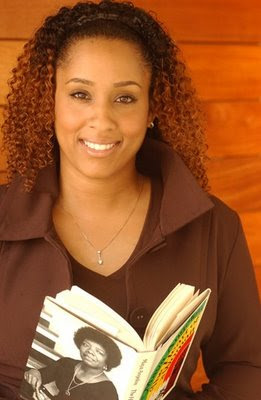
Terry a O'Neal

The first interview features Sacramento author and poet Terry a O'Neal, who is going to be the guest speaker in my Diop Scholars English class at CRC. The class is at 10:30 am on Tuesday, May 5. This will be Terry's second appearance at CRC, after her Black History Month reading on February 16. I have also hosted her reading at the Sacramento Poetry Center, where she treated us to an evening of inspiring and enlightening poetry. Now she is coming to talk with the Diop Scholars about her novel, Sweet Lavender, which the class uses as a set-book.

In this interview Terry a O'Neal talks about her writing, poetry, film, and other projects.

Congratulations on the success of the Black History Bee. Could you please explain what prompted you to start this project and what your future plans are for it?

It is important that all races have an understanding of African American history and the marvelous contributions that African Americans and people of African descent have given to society, and to the world. In order to shape the present, it’s important that we recognize and understand the past. I notice that many young people today lack knowledge, pride, unity and will-power. The goal of the Black History Bee is to educate and motivate today’s youth to accomplish great things in life, and to carry on the legacy that has been passed down over generations to ensure that the justice that Blacks fought and died for and all the accomplishments Blacks have had don’t get buried and left in the past. It is important for young people to understand that we wouldn’t have the luxuries that we are blessed with today—to live in nice houses; go to integrated schools; and to eat at fine restaurants without the sacrifices these people made. There would be no Black doctors, lawyers, or even a black president had it not been for the blood shed, tears, and struggle endured by our ancestors.

The ultimate goal for the Black History Bee is to travel to various schools throughout the United States to reach as many young people within our power.

In addition to being a poet and a writer, you are also involved in the making of documentaries. What are you working on currently in the area of documentary?

Presently, I am working on a documentary project called Hope of Finding a Son: The Maurice Red Jefferson Story, that tells the accounts of a 16-year-old boy who disappeared from the Ft. Lauderdale, Florida community while on his way to basketball practice one Monday afternoon. On the day of November 28, 1983, Maurice Jefferson simply vanished and was never seen or heard from again. My goal of this documentary is to generate some answers as to his whereabouts and discover missing pieces to his case. Whether he’s dead or alive, his family longs to know so that they can have closure.


At the two poetry readings I have hosted, you pointed out that discouragement from an English teacher turned you into a writer. Could you please give more details on this? What do you think is the role of teachers in an aspiring writer’s life?

The power that a teacher or role model holds in inspiring minds is great. As a child, I was always rebellious—a goal getter and a dream chaser. I took chances, even if it meant that there was a belt strap waiting for me when I stepped foot in the front door. Not all of the roads I’ve traveled lead me in the right direction. I’ve been down some dark and scary paths in my time but from this I’ve grown stronger and wiser. Through trial and error, we are meant to learn, grow, and get back on track to continue on our journey through life.

Over my life I have been inspired by many people in various ways. My high school counselor, my elders, and even some of my teachers contributed to the molding of the woman I have become—the good and bad alike.

While I was enrolled in an English course at CRC, my English instructor graded one of my term papers. In this particular paper I was inspired to insert a poem—a technique that I had never used before. When I received my paper back, I immediately began to review his remarks. It was at this time that I noticed the notes he jotted down in red ink beside the poem. The remarks read: “Nice poem. If this is the work of another author, please state the author’s name and where you found it.” Though the comment was bitter-sweet for me, it was those words that actually inspired me to begin writing my first book of poetry.

Which was your first calling, poetry, fiction or film? Which one of these brings you closest to your creative urge?

Poetry is my first love—it’s my passion. As far back as elementary school, I remember writing lyrics and songs. At the age of 6 years old, I met Maya Angelou. She held a book signing at an African Gallery where my mother worked on the north side of town where I was born and raised. Poetry allows me be creative, to fantasize, and to dream. Through poetry I can play with words without fear of consequences. Poetry allows me to free my soul of burdens and chase my dreams.

Your poetry speaks to issues affecting African American people (The Poet Speaks in Black), but you also deal with concerns affecting all humans. What do you think is your role as a poet in society?

My role as a poet in society is to inspire others, while at the same time, enlightening them to the troubles, the issues, and the goodness that life brings knocking at our doors. My poetry allows me to relate to others who might be experiencing similar situations and encourage them—give them comfort in knowing that they are not alone in the world. At one point or another, every one of us will find ourselves in a situation that seems unbearable. My desire is that my words will spark a flame of hope in the hearts of others that will give them the motivation they need to smile in their time of sadness; to have faith in their time of trouble; to stand in their weakest hour; and afterwards, once they’ve made it through the storm, to pass on that ray hope to the next person.


What inspired your novel, Sweet Lavender? How far along are the plans for the movie adaptation of the novel?

Sweet Lavender was inspired by my love for father-daughter stories and my fondness for the southern lifestyle. The setting takes place in Cecilia, Louisiana, not far from where my mother was raised. I’m a country girl at heart—I admire what folks call “southern hospitality”, a trait that’s difficult to find in California locals. I appreciate the environment—the sounds of nature; how the moss sways from the trees from a gentle breeze; the creatures resting in the swamps; and the laid back, slow pace lifestyle that the south portrays.

Sweet Lavender was adapted to a full-length feature screenplay in late 2007. It was edited by award-winning writer, producer, and director, Kenneth Rotcop. One of Rotcop’s most influential productions that he wrote and produced in 1983, was entitled “For Us, The Living: The Story of Medgar Evers” which features Laurence Fishburn.

In mid 2008, Sweet Lavender, the novel and the screenplay, was optioned by a Hollywood production company. As of today, they are still working with the script with hopes to have it produced sometime in the near future.

In the meantime, I am working towards adapting Sweet Lavender into a stage play for theatre. So far, I am only in the beginning stages of this project. I hope to have it completed by the end of 2009.

You also work with high school poet performers; how is this program going?

I am an activist of youth literacy and expression, striving to be a positive influence in the lives of young people. So many youth today are in dire need of a method of self expression. In my work with youth over the years, I have discovered that art, creativity, and poetry can be a powerful approach to instilling confidence, inspiring hope, and fostering dreams.
.
I am the editor of the youth poetry anthology Make Some Noise! a volume of poetry written by youth ages 12 to 18, from the United States and abroad. These young poets submit their poetry to be published in the anthology. Make Some Noise! has motivated many young people to face their fears, embrace constructive criticism, and persevere through adversity.

Who are your artistic influences?

When I think of my artistic influences, my mother is always the first person that comes to mind. She was a very talented and creative woman. She exposed us to arts, literature and culture at a very young age. In her spare time she was an artist, sketching beautiful still images. My mother wrote poetry and she taught her children about African and African American culture. I recall many days when my sisters and I would accompany her to work at the African Gallery. Some of the artifacts in the gallery I would use to share with classmates during show-and-tell. My mother had her own small garden in our backyard—rarely did we eat out. We always had home cooked meals. Most of our clothes, she made. She could sew anything from a wedding gown to drapes that hung from the windows. My mother did arts and crafts—making sachets, dolls, and flowered wreaths that adorned living room walls of family and friends. She taught me and my sisters how to cook and sew. It was my mother who first taught us our ABC’s and 123’s, and how to write our name. She was a phenomenal woman.

I draw artistic influence from some of my favorite 19th and 20th century black poets and writers. Langston Hughes whose character I most admire. His style of poetry is unique, powerful, and thought provoking; yet not so complex that the average person could not comprehend. Much of his writing has crossed over the generation gap and is as relevant and inspirational today as it was fifty years ago.

Other influences include Gwendolyn Brooks, Maya Angelou, Paul Lawrence Dunbar, Carolyn Rodgers, W.E.B. Du Bois, and Claude McKay.

What projects are you working on currently?

My line of projects is never ending. “In a World of My Own”, a memoir of my teenage encounters is still in the works. Another volume of poetry “If is a Crooked Word and G Can’t Straighten It”, is due to be released by the end of the year. “Grace and The Fig Tree”, a reader for middle-aged school children, is complete and in the editing process. The first volume should be released by the end of the year as well.

As I mentioned earlier, I’m working on the adaptation of Sweet Lavender into a stage play. In addition, I wish to complete another full length feature screenplay entitled Sisterhood Chronicles, which is currently in the editing process.

Furthermore, I would like to become more active in the cultivation of my non-profit organization Lend Your Hand, Educating the World’s Children, by raising more funds and networking with other foundations to reach a broader range of disadvantaged youth.

What’s your advice to younger writers?

“Carry out your literary dream, no matter how unlikely it may seem.” Becoming a literary success takes time and nurturing. Rarely does it happen overnight. Stay true to your dreams; don’t be afraid to alter (edit) your work; and use constructive criticism to help you grow. Keep in mind that everyone is not going to praise your writing—some will not like it at all. Let negativity roll off your back and you just keep on steppin’.

Everyone has the right to their own opinion—some may be kind, others may be cruel. Some readers are passionate about poetry though many may despise it. Some people worship fantasy and love stories, whereas others prefer the thriller or science fiction genre. It’s all a matter of preference. Don’t be offended when readers or critics don’t show interest in your writing. There are some audiences that we are not meant to reach.

Many doors will close in your face but remember this…where one door closes, another will open. If you are passionate about writing and you aspire to be a published author, you will succeed.

[An expanded conversation with Terry O'Neal will appear on Munyori Literary Journal]


The next interview will feaure Jennifer Armstrong, the Australia-based Zimbabwean author of the memoir Minus the Morning. Armstrong is one of the presenters at the 2009 Dambudzo Marechera Conference at Oxford University.

Blog Archive

About Me

My Photo
Emmanuel Sigauke
I am currently reading Kazuo Ishiguro, Ernest Hemingway, Nadine Gordmer, D.H. Lawrence,Dambudzo Marechera, and Leo Tolstoy, Yusef Komunyakaa, Christopher Vogler, Thomas Hardy
View my complete profile